How to Apply
1. Registration and Payment: Complete the competition registration form Click here and attach your payment confirmation.
Please Note: Registration fees are non-refundable once payment has been made.
2. Project Creation: Create your Scratch project based on the topic assigned to your grade level.
2.1 Primary 1–3 (Grades 1–3): My Personal Data
2.2 Primary 4–6 (Grades 4–6): Privacy in the Digital World
Note: Projects that do not align with the assigned topic for their respective grade level, or are Remix projects (modified from other users’ Scratch projects), will be disqualified and will not be considered for judging.
3. Create Your Project Link: Click the “Share” button on Scratch to generate a project link for submission. For instructions, please refer to How to Submit Your Project Video.
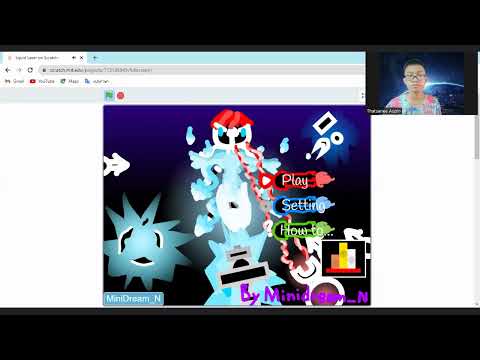
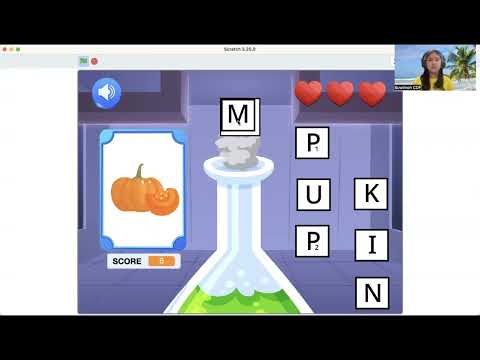
4. Record Your Project Introduction Video following these guidelines:
4.1 The video must be no longer than 3 minutes.
4.2 Introduce yourself by stating your full name and nickname.
4.3 Explain your project’s concept, its benefits, and the problem it aims to solve.
4.4 Describe the target audience for your project.
4.5 Briefly demonstrate how to use your project.
4.6 Upload your video to YouTube only.
5. Submit Your Project (Submission Form): Enter your YouTube video link and Scratch project link in the Submission Form.
Important: Please ensure that all submitted links are set to Public and can be accessed by the judges. Submissions with inaccessible videos or Scratch projects will be disqualified.
Submission Deadline: Participants can submit their projects and introduction videos through the form until January 16, 2027, at 11:59 PM (GMT+7).
6. Wait for the Results: Participants who pass the selection round will advance to the Final Round.
Judging Criteria
1. Code Quality and Logic
The project has an appropriate beginning and ending, runs without errors, and uses suitable algorithms with well-organized code. Unnecessary or unused code is removed, and coding concepts are appropriate for each grade level (Primary 1–3: Events and Loops; Primary 4–6: Variables, Conditionals, and Custom Blocks).
2. Theme Alignment and Message Clarity
The project can be of any type, such as a game, animation, educational media, application, or other creative work, but it must align with the assigned topic for its grade level. The audience should understand the message about personal data or privacy within the first minute, and the content must be accurate.
3. Creativity and Originality
The project demonstrates creativity, originality, and engaging ideas. It must be newly developed by the participant, must not have been submitted to any other competition before, and must not be a Remix project.
4. Usability and User Experience
The project is easy and convenient to use. First-time users should be able to understand how to play or use it without asking for help. Instructions are clear, and text is easy to read.
5. Real-World Benefits
The project raises awareness of personal data and privacy, clearly identifies its target users, and explains how it helps protect their data.
6. Video Presentation
The video must be no longer than 3 minutes and should include a self-introduction, an explanation of the project’s concept, benefits and the problem it addresses, its target users, and a demonstration of how it works. Both audio and video must be clear.